
 Physical activity
 Addictions
 Maternal and infant health
 School
 Infectious diseases
 Cancer screening
 Vaccinations
 Workplace
 Forensic Medicine
 Environment, climate and health
 Animals
Zoonoses and emerging diseases
Infectious animal diseases, including zoonoses (infections that spread naturally between animals and humans), can have a big impact on both the economy and public health, food safety and biodiversity.
There are specific steps that can be taken to stop and control these infections, which are usually part of a wider programme/system of surveillance.
Surveillance is a key part of an efficient and effective disease prevention and control policy, and is put in place, jointly, by operators and competent authorities, to:
● combat zoonoses;
● prevent the introduction of emerging diseases; and
● implement a system for keeping track of the health conditions of establishments where livestock are kept, bred and transported.
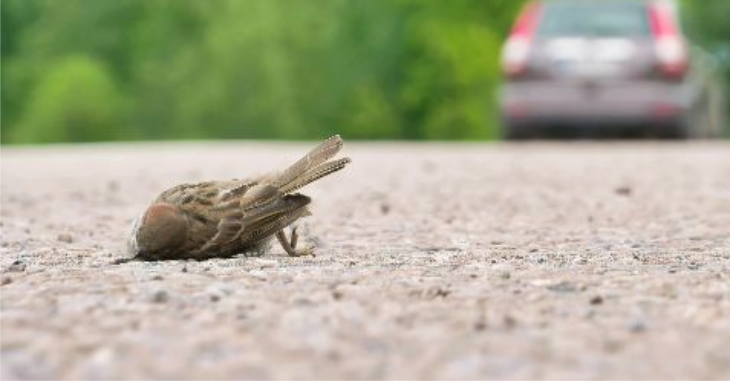
Tackling zoonoses is a big challenge for public health, because human, animal and environmental health are all connected when it comes to overall well-being.
The “One Health” strategy is a multidisciplinary and multisector approach involving professionals, such as doctors and veterinarians, in epidemiological surveillance and control activities, risk prevention and assessment, support for the investigation of epidemiological outbreaks, research, experimentation and training.
Zoonotic agents (bacteria, viruses, parasites, fungi) are transmitted by:
-
2017 Technical report on bovine Tubercolosispdf | 182.21 KB
-
2017 Technical report on Brucellosis in sheep and goatspdf | 177.01 KB
-
2017 Technical report on bovine and bufalo Brucellosispdf | 203.03 KB